
 Posted by
 Graduation day is defined by one image: a sea of graduates in caps and gowns. The colors a school chooses shape the ceremony, the photos, and the memories, and they carry meaning too, from academic traditions that signal degree and field of study to high school colors that show school spirit. This guide explains what cap and gown colors mean, how they differ by degree, and how to choose the right ones for your ceremony.
What Are the Basic Parts of a Cap and Gown?
A graduation cap and gown — often called academic regalia — is the traditional outfit worn at commencement. The tradition traces back to the medieval universities of Europe in the 12th and 13th centuries, when scholars wore long robes and hoods to stay warm in unheated stone buildings. Over time, that practical clothing became a formal uniform marking the moment a student becomes a graduate.
Most graduation outfits are built from three core pieces:

- Cap: Usually a flat, square-topped mortarboard. Doctoral graduates often wear a soft velvet tam instead, typically with four, six, or eight sides.
- Gown: The long robe worn over street clothes. Its sleeve shape and trim change depending on the degree being earned.
- Tassel: The tassel hangs from the button atop the cap and is often moved from one side to the other during the ceremony to mark the transition from candidate to graduate.
College graduates may also wear an academic hood draped over the shoulders, and graduates at any level may add honor cords, stoles, or medallions to recognize achievements. For a closer look at this piece of the outfit, see Graduation Authority’s Quick Guide to the Graduation Tassel.
What Does Graduation Cap and Gown Color Meaning Come From?
Graduation cap and gown color meaning comes from a formal system. In the 1890s, a group of American colleges and universities created the Intercollegiate Code of Academic Costume to standardize regalia across institutions. The American Council on Education (ACE) revised the code in 1932 and has maintained it since, and it’s still the reference most U.S. colleges follow today.
Under the code, colors primarily signal a graduate’s field of study. That color appears on the velvet trim of an academic hood, on the velvet panels and sleeve bars of doctoral gowns, and sometimes on the tassel. Some of the most recognized academic colors include:
- White: Arts, Letters, and Humanities
- Golden Yellow: Science
- Drab (light tan-brown): Business
- Light Blue: Education
- Orange: Engineering
- Brown: Fine Arts
- Purple: Law
- Green: Medicine
- Pink: Music
- Apricot: Nursing
- Scarlet: Theology
- Dark Blue: Philosophy (worn on Ph.D. regalia)
Gown color works differently. The ACE code recommends black gowns for college degrees, which is why so many college ceremonies look uniform from a distance. The code is a guideline rather than a rule, though, and many colleges and universities now use gowns in their official school colors. Most high schools don’t follow the academic color system at all — they choose graduation gown colors that match their school’s branding instead.

How Do Cap and Gown Colors Differ by Degree Level?
Each degree level has its own customs, so the colors on graduation gowns — and the way the gowns are cut — shift as a student moves up the academic ladder.
- High school: Gowns are almost always chosen in school colors, such as royal blue, maroon, red, green, black, or white, with a matching cap and a tassel in one or two school colors, often with a year charm. Hoods aren’t part of high school regalia.
- Associate degree: Graduates typically wear a standard gown in black or the college’s own color, with a cap and tassel. Hoods aren’t standard here, though some colleges add stoles or cords.
- Bachelor’s degree: The bachelor’s gown has pointed sleeves and is traditionally black. Some schools add a bachelor’s hood trimmed in the field-of-study color and lined with the school’s colors, while many reserve hoods for graduate degrees.
- Master’s degree: Master’s gowns are recognized by their long, oblong sleeves open at the wrist. The master’s hood is longer than the bachelor’s hood and shows the field-of-study color on its velvet trim.
- Doctoral degree: Doctoral gowns have full, bell-shaped sleeves with three velvet bars and velvet panels down the front. The velvet can be black or the field-of-study color (dark blue for a Ph.D., for example), and doctoral graduates often wear a velvet tam, which may carry a gold tassel. Some universities design custom doctoral gowns in their school colors.
Shop regalia by degree level in Graduation Authority’s College Caps and Gowns collection, from associate and bachelor’s sets to master’s and doctoral gowns, hoods, and tams.
How Should Coordinators Choose the Right Cap and Gown Color?
For most graduates, the gown color is decided by the school. For the coordinators, class officers, and administrators who make that call, a few steps help get it right:
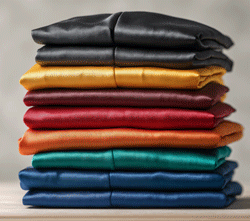
- Start with official school colors. Confirm the exact shades in the school’s brand guide or student handbook, or with the graduation coordinator. “Red” could mean deep crimson or bright cherry red, and the difference shows clearly in photos.
- Pick a color layout. Many schools dress the whole class in one primary color for a solid block. Others alternate between two school colors, which looks striking from the stands and in group photos.
- Think about the venue and photos. Light gowns such as white, silver, or gold look bright outdoors but can show wrinkles underneath. Deeper colors like navy, maroon, and black photograph well in most settings.
- Order from one supplier. Ordering every gown, cap, and tassel from the same source keeps colors consistent, so one student isn’t wearing navy while another wears royal blue.
- Follow school guidelines. Graduation cap colors, tassel placement, and allowed accessories are usually set by the school, so students should check the rules before adding anything to their regalia.
Find caps, gowns, and tassels in a wide range of school colors in Graduation Authority’s Graduation Caps and Gowns collection.

How Can Graduates Accessorize Their Cap and Gown?
A uniform gown color doesn’t mean every graduate has to look the same. Accessories add color, recognize achievements, and let graduates show personality while staying within school guidelines.
- Tassels: Many schools use a two-tone tassel combining both school colors, often with a gold or silver year charm. At college ceremonies, the tassel may be black or match the field-of-study color instead.
- Honor cords: Twisted cords in different colors recognize academic honors, honor societies, and club involvement. Gold is a common color for academic distinction, but exact meanings vary by school and organization.
- Stoles: A stole drapes around the neck and hangs down the front of the gown, giving more room to show school colors, a logo, the graduation year, Greek letters, or an officer title.
- Medallions: A medallion worn on a ribbon recognizes special roles such as valedictorian or salutatorian.
Browse Graduation Authority’s Honor Cords & Stoles and Graduation Tassels to complete the look in your school colors.

Do Cap and Gown Colors Vary by Region or Culture?
Cap and gown colors in the United States largely follow the ACE code, but graduation traditions look different around the world. In the United Kingdom and many Commonwealth countries, each university sets its own scheme of gown and hood colors and patterns, so the same subject can look completely different from one school to the next. In other countries, ceremonies may place less emphasis on hoods and more on caps, sashes, or ceremonial dress specific to the institution.
Cultural heritage also shapes what graduates wear in the U.S. Many students add stoles that honor their background, such as kente cloth stoles or stoles featuring the flag of a family’s home country or a country where the student studied abroad. When a school allows these additions, they’re worn alongside the official cap and gown colors rather than replacing them.

What Trends Are Shaping Cap and Gown Colors Today?
Graduation traditions change slowly, but a few trends are shaping how cap and gown colors look at ceremonies today:
- Bolder school colors: More schools are moving beyond all-black gowns toward school-color gowns that stand out in photos.
- Alternating color patterns: Rows or sections in two school colors create a striking look from the stands.
- Eco-conscious gowns: Gowns made from recycled materials are increasingly common as schools look for more sustainable options.
- Personalization: Stoles, decorated caps, and custom tassels let graduates express individuality without changing the official gown color.
Social media has also raised the stakes for how graduation looks on camera. Because graduation photos are shared so widely, schools and students are paying closer attention to color choices that look great in pictures — one more reason choosing the right cap and gown colors matters.
Wear Your Colors With Pride
Cap and gown colors do more than coordinate a ceremony. They connect graduates to an academic tradition that stretches back centuries, signal degree level and field of study at the college level, and showcase school spirit at the high school level. Whether you’re a coordinator choosing gown colors for an entire class or a graduate getting ready to walk across the stage, understanding what the colors mean makes the day even more meaningful. Wear yours with pride — you’ve earned it.
Ready to outfit your class? Shop Graduation Authority’s Graduation Caps and Gowns collection to find caps, gowns, and tassels in your school colors.
FAQ
What do the colors on graduation caps and gowns mean?
At the college level, colors on graduation gowns and hoods usually represent a graduate’s field of study under the American Council on Education’s academic costume code, such as light blue for education, golden yellow for science, and drab for business. Hood linings show the school’s own colors. At the high school level, cap and gown colors almost always reflect school colors and school spirit rather than an academic meaning.
What color gown do you wear for a master’s or doctoral degree?
Most master’s and doctoral graduates wear black gowns, which the academic costume code recommends for college degrees. Master’s gowns have long, oblong sleeves, while doctoral gowns have bell-shaped sleeves, velvet front panels, and three velvet bars on each sleeve in black or the field-of-study color. Some universities use custom doctoral gowns in school colors, so check your institution’s regalia guidelines.
Can you choose your own cap and gown color?
In most cases, no. Graduation cap and gown colors are set by the school so the class looks unified at commencement, though some schools let students choose between two school colors or assign colors by row. Graduates can usually personalize through accessories instead, such as earned honor cords, stoles, and decorated caps where allowed. Check your school’s guidelines before ordering or adding anything to your gown.