
 Posted by
 Walk through any graduation ceremony and you’ll spot bright cords draped around graduates’ necks: gold, silver, red, royal blue, and every shade in between. Understanding graduation cord color meaning helps you read the story behind each one. Those colored cords at graduation aren’t just accessories. They can signal academic honors, honor society membership, community service, leadership, or a favorite subject.
Here’s the catch: cord colors can change from high school to college, and from one school to the next. This guide explains what honor cords are, what common honor cord colors mean, and how to choose the cord that best represents everything you’ve accomplished.

Understanding Graduation Honor Cords
Graduation honor cords, often called graduation ropes, are twisted cords with a tassel at each end. They’re worn draped around the back of the neck so both ends hang evenly down the front of the gown. A graduation rope can recognize Latin honors, a high GPA, honor society membership, leadership, community service, or excellence in a particular subject or field of study.
Honor cords grew out of the broader tradition of academic regalia, which uses color and dress to show what a graduate has earned. The cap and gown mark the degree itself, while cords let individual graduates stand out for the extra work they put in along the way.
There are a few key differences between high school and college honor cords:
- High school: Cords usually recognize honor roll status, National Honor Society or other honor society membership, club involvement, or excellence in a favorite subject. Schools often keep the color list simple and tied to school colors.
- College: Cords more often represent Latin honors (cum laude, magna cum laude, summa cum laude), departmental honors, or membership in national honor societies. Colors may also reflect a field of study.
Honor cords are just one piece of the bigger regalia picture. For a full breakdown of cords, stoles, sashes, and academic hoods, read Graduation Authority’s Quick Guide for Graduation Honor Cords, Stoles, and Hoods.
Symbolism of Honor Cord Colors
So, what do colored cords mean at graduation? There is no single national rulebook for honor cord colors. Each school, department, or honor society chooses its own colors, which is why the same color can mean different things on different campuses. That said, many colors carry widely shared symbolism that schools and graduates draw on when choosing a cord:

- Black: Power, authority, and prestige
- Emerald Green: Growth, renewal, and well-being
- Gold: Prosperity, compassion, wisdom, and high achievement
- Maroon: Confidence, passion, and power
- Navy Blue: Intelligence, loyalty, and wisdom
- Orange: Individuality and creative spirit
- Purple: Ambition, creativity, and devotion
- Red: Courage, willpower, and strength
- Royal Blue: Community service, trustworthiness, and sophistication
- Silver: Elegance, kindness, hope, and sensitivity
- Sky Blue: Honesty and intelligence
- Turquoise: Energy, serenity, and balance
- White: Purity, spirituality, and possibility
Use this list as a starting point for graduation rope color meaning, then confirm the details with your own school or organization.
College Honor Cord Colors by Field of Study
At the college level, honor cord colors are often linked to a graduate’s major or degree program. The list below shows common color associations many schools use. Cord colors don’t always match academic hood colors, which follow a separate code (science hoods, for example, are traditionally golden yellow), so always confirm with your department.
- Accounting: Black
- Agriculture: Silver
- Architecture: Purple
- Arts: Pink or White
- Business: Black
- Dentistry: Purple
- Education: Sky Blue
- Engineering: Orange
- Environmental Studies: Green
- Forestry: Maroon
- High academic achievement (cum laude, magna cum laude, summa cum laude): Gold
- Honor society membership or achievement in two academic fields: Double or multicolor
- Humanities: Red or White
- Journalism: Red
- Law: Purple
- Leadership: Royal Blue
- Medicine: Emerald Green
- Music: Pink
- Philosophy: Navy Blue
- Physics: Silver
- Public Health: Red
- Science: Green
- Theology: Maroon
- Urban Planning: Purple
- Veterinary Science: Silver
High School Honor Cord Colors by Subject
Graduating high school is one of the first big milestones in a young person’s life. Many high schools let students wear an honor cord in a color tied to a best or favorite subject, or award cords for honor roll and service. Common high school honor cord colors include:
- Arts: Purple or Red
- Business: Black
- Community Service: Silver
- Economics: Black
- English: White
- Environmental Sciences: Green
- History: White
- Honor Roll: Gold
- Humanities: Purple
- Music: Pink
- Performing Arts: Pink
- Social Sciences: Blue
Some high schools also give medallions to top students, such as the valedictorian and salutatorian, to wear alongside their cords. Explore Graduation Authority’s Graduation Medals & Awards for these special recognitions.

Factors to Consider When Choosing a Color
In many cases, your school or honor society assigns the cord color for you. When you do have a choice, or when you’re an advisor selecting cords for a club or program, consider these factors:
- Personal achievements and honors: Start with what the cord is recognizing. Academic honors are most often shown in gold, while service, leadership, and subject-based honors usually have their own colors.
- School colors and traditions: Many schools build cord colors around their own school colors so graduates look unified on stage. Check whether your school already has an official color list.
- Future aspirations and career paths: Some graduates choose a cord color linked to the field they plan to pursue, such as sky blue for a future teacher or emerald green for a student heading into medicine.
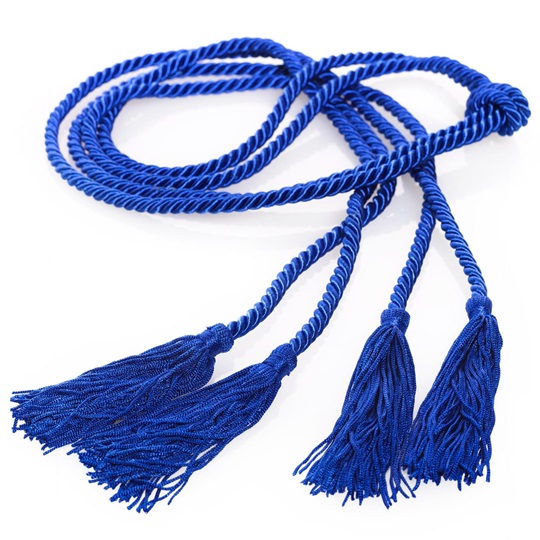
Popular Color Combinations
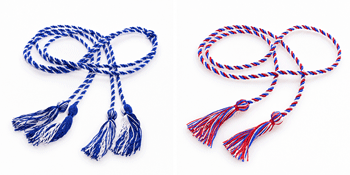
Double and multicolor honor cords combine two or more colors in a single twisted rope. They’re a popular way to represent two accomplishments at once, match school colors, or recognize membership in an organization with its own colors. Popular pairings include:
- Gold and white: A classic combination for academic honors and honor society membership.
- Blue and gold: A favorite for honor societies and for schools with blue and gold colors.
- Red and white: A bold option for schools and clubs with red as a primary color.
- School-color pairs: Any two school colors twisted together make a cord that shows off school spirit.
Graduates who earn several honors can also wear more than one cord at once, layering them for a colorful look that shows the full range of their involvement.
Graduation Authority’s Single Honor Cords come in a wide range of colors, and Double Honor Cords are available in one-, two-, and multicolor options to match any honor, club, or school color scheme.
Cultural and Institutional Significance
Honor cords mean the most when they reflect the traditions of the school or organization awarding them. Many national honor societies have their own official colors, and chapters often present cords in those colors at a pre-graduation ceremony. Individual colleges and departments may also create their own cords for programs such as first-generation graduates, student-athletes, veterans, or study abroad participants.
Cultural organizations on campus may award cords in colors tied to a shared heritage, giving graduates a way to honor their background alongside their academic achievements. Because these meanings are set locally, a graduate’s school or organization is always the final word on what a specific cord color means.
Tips for Selecting the Right Honor Cord
- Reflect on your values and experiences: Think about what you’re proudest of, whether it’s a subject you loved, a club you led, or hours spent volunteering, and choose a cord that represents it.
- Seek advice from mentors or peers: Advisors, teachers, and honor society officers usually know the official colors and rules for wearing cords at your ceremony.
- Consider your overall graduation outfit: Choose colors that look good against your gown color and with any stoles or medallions you’ll be wearing, so your regalia looks polished in photos.
- Check the rules first: Some schools limit which cords can be worn at commencement, or only allow cords awarded by recognized organizations.
Where to Buy Graduation Honor Cords
Many honor societies and schools provide cords directly to eligible graduates. When they don’t, or when an advisor needs cords for an entire club or class, ordering online makes it easy to get matching colors in the right quantity. Look for cords that are a standard adult length, have full tassels on both ends, and come in true-to-color shades that match your school or organization.
Shop Graduation Authority’s Honor Cords, Stoles & Sashes collection to find cords in single, double, and multicolor options for high school and college graduates.
Caring for Your Honor Cords
Keep cords in their packaging until graduation day to prevent tangles and fraying. If the tassels get crushed, gently comb them out with your fingers or a wide-tooth comb. On graduation day, make sure both ends hang evenly, and pin the cord to your gown if needed so it stays in place.
After the ceremony, honor cords make meaningful keepsakes. Many graduates display them in a shadow box with their diploma, tassel, and photos, or hang them alongside a framed diploma as a lasting reminder of what they achieved.
Frequently Asked Questions
What do colored cords mean at graduation?
Colored cords at graduation recognize a graduate’s achievements, such as Latin honors, a high GPA, honor society membership, leadership, community service, or excellence in a subject. Each color represents a specific honor or field, but there’s no single national standard, so meanings are set by each school or organization. Check with your school or honor society to confirm what each cord color means.
What does a gold honor cord mean?
A gold honor cord most often represents high academic achievement. At the college level, gold cords are commonly worn by graduates earning Latin honors such as cum laude, magna cum laude, or summa cum laude. In high school, gold cords frequently recognize honor roll students or honor society members. Gold is also associated with wisdom and prosperity, which is why it’s one of the most popular honor cord colors.
Can you wear multiple honor cords at graduation?
Yes, most schools allow graduates to wear multiple honor cords if each one was earned. Graduates often layer several graduation ropes to represent academic honors, honor societies, and clubs at once. Each cord is draped around the back of the neck with both ends hanging evenly down the front. Some schools limit which cords are allowed, so check your ceremony guidelines first.
Graduation cord color meaning goes well beyond style. Each color tells part of a graduate’s story, whether that’s academic excellence, leadership, service, or passion for a subject, and turns a standard cap and gown into a personal celebration of the journey. Whether you’re wearing a single gold cord or several colorful graduation ropes at once, understanding what they mean makes the moment you walk across the stage even more special.
Ready to honor your achievements? Shop Graduation Authority’s Honor Cords, Stoles & Sashes collection to find the perfect cord color for your graduation day.